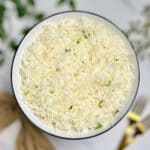
Buttered Basmati Rice
Blog: www.nextinlime.com
Servings: 3
Ingredients
- 1 cup (185 g) basmati rice - preferably long grain and aged (Note A)
- 1.5 cups (355 ml) water
- ¾ teaspoon salt
- 3 tablespoons (42 g) unsalted butter - softened (Note B)
- some chopped fresh parsley - optional, for garnishing
Instructions
- Put the basmati rice in a big bowl, fill with water, gently swirl with hands and then drain using a fine mesh strainer. Repeat this until the water runs clear (around 3 times). Don't skip – this step is crucial for getting rid of excess starch.
- Soak the washed rice in room temperature water for 30 minutes. Then drain again using a fine mesh strainer.
- Combine water and salt in a saucepan and bring to a boil on high heat. Once boiling, add the drained rice plus 1 tablespoon butter.
- Cover the saucepan with a lid. Continue cooking on high heat until about 30% of water is left (roughly 4 to 7 minutes, depending on the rice quantity). If foam or bubbles begin to overflow, remove the lid for few seconds, then put it back.
- To check if it's time for next step, take off the lid and look for a super thin layer of water bubbling on surface.
- Then add your remaining butter, mix very gently, cover again and reduce the heat to the lowest setting on your stovetop. Let the rice steam 10 minutes (setting a timer is important).
- Next, turn off the heat, remove the saucepan from the burner but don't remove the lid. Let the rice rest covered for 10 minutes (not more). Don't be tempted to open the lid during steaming and resting time.
- Once the resting time is up, remove the lid, spoon out the basmati rice, garnish with some chopped parsley (optional) and serve. Tip: No need to fluff the rice with a fork or spoon – it'll already be fluffy and you don't want those pretty grains to break.
Notes
Note A: Basmati rice – Long grain rice that's been aged for 2 years is the best. If available, I'd even go for the extra-long grain options. I usually get mine from Indian or Pakistani grocery stores.
Note B: Butter – Needs to be softened so it melts quickly, especially when you put it in before the steaming step. If using salted butter, decrease the amount of added salt.
Note C: Helpful content – Click on the links below for related useful content in the main body of the post.
Note D: Related – Try this parboiled basmati rice or this barberry rice with chicken next.