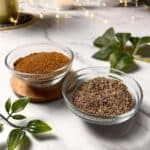
Cumin Powder (Ground Cumin)
Blog: www.nextinlime.com
Servings: 12 tablespoons
Ingredients
- 1 cup (100 g) cumin seeds - aka jeera, zeera, comino molido
Instructions
- Heat a frying pan or skillet over medium-low heat.
- Add the whole cumin seeds and toast for 3-4 minutes, stirring constantly until they are fragrant. Be careful not to burn the seeds - they should only turn slightly darker than their original color. Over-roasted seeds will turn very bitter.
- Remove the pan from heat. Transfer the toasted seeds to a paper towel-lined plate and spread them out evenly. Let them cool and crisp up for a few minutes.
- Grind the seeds in a spice or coffee grinder. If you don't have a grinder, use a pestle and mortar. Alternatively, transfer the seeds into a resealable plastic bag, seal it properly, and use a rolling pin to crush the seeds into a powder. Don't worry if the powder is not finely ground, as crushed cumin works just as well as ground cumin.
- Transfer the ground cumin powder to an airtight container. Although the powder has a long shelf life, it's best to use it within a couple of months for the best taste. If you don't use cumin powder frequently, consider making smaller batches.
Notes
Note A: Uses of cumin: Cumin is a versatile spice that boosts the flavor of spice blends, soups, stews, meat dishes, rice dishes, roasted vegetables, dips, sauces, bread, pastries, pickles, and beverages. See above for more on how to use cumin in your cooking.
Note B: Cumin seeds vs ground cumin powder: Cumin comes in two forms, cumin seeds and ground cumin powder, with distinct characteristics suitable for different cooking applications. Check out the post above for more on the differences and similarities between the two.
Note C: 1 teaspoon cumin seeds to ground cumin powder: To use ground cumin powder in place of cumin seeds, use approximately ¾ teaspoon of ground cumin for every teaspoon of cumin seeds.