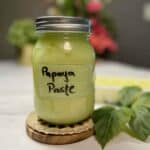
Green Papaya Paste for Tenderizing Meat
Blog: www.nextinlime.com
Servings: 80 tablespoons of paste
Ingredients
- 2.5 pounds (1134 g) green papaya or pawpaw - also called green papaya or raw papaya
- ½ cup (118 ml) distilled white vinegar
- ½ cup (118 ml) water - use minimal water to blend papaya into a paste. Adjust as necessary.
Instructions
Preparing Papaya Paste
- Wash the green papaya and cut it in half lengthwise. See Note A below.
- Use a spoon to scoop out the seeds and discard them. If desired, peel the papaya skin with a vegetable peeler or sharp knife. Note that some people prefer to leave the skin on.
- Cut the papaya into small cubes and place them in a blender or food processor.
- Add white vinegar. Also, add water to the blender to help puree the papaya.
- Blend the papaya until it becomes a smooth paste. If needed, add a little more water as you blend, taking care not to make the paste runny. You may need to scrape down the sides of the blender/food processor a few times. Use the papaya paste as desired in recipes or store it for later use.
Storing Papaya Paste
- Refrigerate: Keep papaya paste in an airtight container in the fridge for up to a week.
- Freeze: To freeze papaya paste, you have two options: ice cube trays or freezer-safe ziplock bags. If using ice cube trays, put the paste into the tray and freeze. Once frozen, transfer the cubes to a ziplock bag and freeze again. If using a ziploc bag, put the paste into the bag, flatten it, press out any air, and seal the bag. Then dent the flattened bag with a butter knife to create square partitions (about 1 inch each) that can be easily broken off when needed. You can store frozen papaya paste for up to 6 months.
- Thaw: For thawing papaya paste, place it in the fridge overnight. Or leave it at room temperature to thaw. Avoid thawing in the microwave, as overheating can compromise its texture and tenderizing properties. Once thawed, give the papaya paste a good stir to recombine any separated liquids, and it's ready to use.
Using Papaya Paste as a Meat Tenderizer
- Amount to use: For optimal results, adjust the amount of papaya paste based on the size and toughness of the meat. As a general rule, use one tablespoon of paste per pound (around 500 grams) of meat and ensure that the paste is evenly distributed. For thin, tender, or small cuts of meat, use less paste. You can also mix the paste with marinades before applying it to the meat.
- Marinating time: For larger and tougher cuts of meat, marinate for at least 2 hours. For thinner and more delicate meats, 30 minutes to 1 hour may be sufficient.
- Washing off: It's not necessary to wash off papaya paste from meat. But if you do, pat it dry with a paper towel. Don't add spices until after washing.
Notes
Note A: Papaya - Green, unripe papaya is the best option for making papaya paste for meat tenderizing as it contains higher amounts of papain. Ripe papaya also contains papain, but in much smaller amounts. Look for firm green papayas with few spots and avoid those with blemishes or soft spots. Green papayas can be found in most Asian and Indian stores. You can leave the papaya skin on when making the paste, but I prefer to peel it off.
Note B: How to check if the meat has tenderized - It can be difficult to tell if the meat has been properly tenderized because the tenderizing action happens at a microscopic level. One way to check for tenderness is to look for physical changes in the meat, such as a slightly softer texture or a slightly discolored surface. Another way to test for tenderness is to press down on the meat with a fork or your finger to see if it feels more tender than before. But if you're not sure, it's best to err on the side of caution and not let the meat marinate in the papaya paste for too long.
Note C: Types of meat that can be tenderized - Papaya paste is a versatile and natural meat tenderizer that can be used on various types of meat. These meats include beef, lamb, goat (mutton), pork, chicken, turkey, duck, goose, venison, bison, elk, moose, and rabbit. The amount of paste and marinating time will vary depending on the type of meat, with game meats requiring a longer marinating time due to their tougher texture.
Note D: Papaya paste substitutes - There are other natural meat tenderizers that can be used in place of papaya paste. These include pineapple, kiwi, ginger, figs, papaya seeds, yogurt, and buttermilk. For more information on these substitutes, see this section above. In addition to natural options, you can also use commercial meat tenderizers. Some examples of these include meat tenderizing powders from Adolph's, McCormick, and Lawry's. These store-bought tenderizers contain bromelain, papain, or both. And can also contain seasonings, added salt, and preservatives.