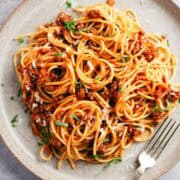
Spaghetti Bolognese
Blog: www.nextinlime.com
Servings: 5
Ingredients
Tomato sauce mix
- 28 ounces (800 g) canned crushed tomatoes - tomato passata also works (see Note A below)
- 2 tablespoons tomato paste
- 1 teaspoon ground black pepper
- 1.5 teaspoons regular white salt - aka table salt (Note B)
- ½ teaspoon crushed red pepper flakes - optional, adjust to taste ⓘ
- 1 pinch ground nutmeg
- 1 pinch ground cinnamon
- ½ teaspoon fennel seeds - finely crushed
- 1 teaspoon dried oregano
- 2 dried bay leaves
- 1 teaspoon chicken bouillon - paste or powder
- 1 tablespoon Worcestershire sauce
Soffritto
- 1 medium (100 g) onion - finely minced (Note C has a tip)
- 1 small (50 g) carrot - finely minced
- 1 stick/rib (50 g) celery - finely minced
Other ingredients
- 14 ounces (400 g) uncooked spaghetti - tagliatelle and pappardelle are great alternatives
- 2 tablespoons cooking oil
- 4 cloves garlic - thinly sliced
- 1 pound (500 g) ground beef
- ½ cup (50 g) freshly grated parmesan - and some extra for serving
- 2 tablespoons fresh lemon juice - not commonly used in bolognese, but works great (see Note D)
- 2 tablespoons chopped fresh basil - and some extra for serving
Instructions
- In a bowl, combine all ingredients listed under "tomato sauce mix" and set it aside. In a separate bowl, combine all ingredients listed under "soffritto" and set it aside.
- Heat oil in a dutch oven or heavy-bottomed wide pan/pot over medium heat. Add the prepared soffritto. Stir and cook 6 to 8 minutes or until softened. Then add sliced garlic and cook for 30 seconds.
- Turn the heat up to medium-high and add the beef. Cook for 10 to 12 minutes or until browned. Break it up as it cooks.
- Add the prepared tomato sauce mix, plus 2 cups water. Stir well and bring it to a simmer. Then lower the heat and let the sauce cook at a very gentle simmer. Cook uncovered (a splatter guard is fine) for 1½ to 4 hours. The longer it cooks, the better. Stir occasionally.
- As the sauce reduces, it may start to get a little too thick. When that happens, add some plain water, no more than ½ cup at a time, to loosen it up. Repeat as needed while the sauce cooks. By the time the sauce is done, any added water should have cooked off, and the fat should have separated.
- When the sauce is about 30ish minutes from being ready, bring a large pot of water to a boil. Follow the package instructions to cook the spaghetti. Reserve 1 cup of pasta water. Then drain the spaghetti and set it aside.
- When the sauce is done, discard the bay leaves. Add the parmesan, lemon juice, and chopped basil. Give it a quick stir. Then add the cooked spaghetti and gently toss until well combined. If the sauce feels too thick, add a splash of the reserved pasta water to loosen it up. Let the spaghetti warm through for a minute or two.
- Top with extra chopped basil and parmesan if you like, and enjoy.
Notes
Note A: Canned tomatoes – A 28-ounce can is roughly equivalent to an 800 g or 800 ml can. If you can, use canned San Marzano tomatoes. Since they’re usually sold whole and peeled, not crushed, pulse them in a food processor or blender before using.
Note B: Salt – the quantity might seem like a bit more than you’d typically use, but the sauce gets tossed with spaghetti at the end, and it balances out well. Sometimes I even add a little more after tasting the finished dish.
Note C: Mincing tip –Onion, carrot, and celery need to be finely minced, not chopped or pureed. I cut them into chunks, then pulse them in short bursts in a food processor until they’re finely minced. Onion separately first, then the carrot and celery together.
Note D: Lemon juice – I’m sure someone will point out that lemon juice isn’t traditional in bolognese, and they’d be right. I came across a bolognese recipe by Matt Preston, a former MasterChef Australia judge, where he added lemon, so I gave it a try. It really does add a nice finishing touch of brightness and freshness to the taste.