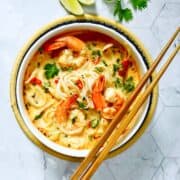
Tom Yum Noodle Soup
Blog: www.nextinlime.com
Servings: 6 bowls
Ingredients
- 8
ounces (227 g) dried rice stick noodles - medium thickness - 3 cups (710 ml) chicken broth/stock - unsalted , see Note 1 below
- 4 cups (946 ml) water - doesn't include the water needed to boil noodles
- 3 stalks of lemongrass - white/yellow part only, bruised and then cut into 2 to 3 inch chunks. See Note 2 below
- 8 slices of galangal - 2 inch piece of galangal cut into thin slices
- 12 kaffir lime leaves - roughly hand-torn
- 5 Thai/Birds eye green/red chilies - finely chopped, divided, 3 for cooking, 2 for garnish
- 4 cloves of garlic - grated or finely chopped
- 5
ounces (142 g) fresh shimeji / beech mushrooms - or any of your favorite mushrooms, see Note 3 below - 1 medium tomato - cut into wedges
- 3 medium-sized shallots - cut into wedges
- 3 teaspoons tom yum paste
- 4 tablespoons fish sauce
- 1 pound (0.5 kg) raw shrimp - peeled and deveined, tail-on or tail-off (weighed after thawing)
- 2 tablespoons Nam Prik Pao - Thai chili paste/jam, See Note 4 below
- 1 cup (237 ml) canned coconut milk - or evaporated milk
- 1 teaspoon salt - skip if using salted chicken stock/broth or bouillon
- 1 teaspoon sugar
- 6 tablespoons lime juice - around 1.5 large limes
- 1 lime - cut into wedges for serving
- chopped coriander/cilantro - for garnishing
Instructions
- Prepare the noodles as per package instructions. To prevent noodles from sticking together, coat the cooked and drained noodles with a splash of olive oil or any other cooking oil using a large fork or a tong.
- Bring water and chicken broth to a boil in a pot.
- In the boiling liquid, add lemongrass chunks, galangal slices, and the torn kaffir lime leaves.
- Let this simmer for 12-14 minutes on medium-high heat.
- Then remove (sieve out) some or all of the lemongrass, galangal, and kaffir lime leaves as they are inedible. However, you can also leave these aromatics in the soup, as is traditionally done in Thailand, but be sure to warn your guests.
- Now add 3 finely chopped Thai /Bird's eye chilies and the grated or finely chopped garlic.
- Add the mushrooms. Let them cook for 2 to 3 minutes.
- Add tomato wedges, shallot wedges, tom yum paste and the fish sauce and let the soup boil for 3 to 4 minutes. When using salted chicken broth/stock or bouillon powder/cubes, reduce the quantity of fish sauce in this recipe from 4 tablespoons to 3 tablespoons.
- Follow option A or option B below based on your soup variation preference.
Option A: Next Steps for Clear Tom Yum Noodle Soup
- With the heat still set to medium-high, and the soup boiling, add the (thawed) shrimp. Shrimp cook fast, so keep a close eye. Cook for 2 to 3 minutes, or until they turn opaque and white/pink.
- Add Nam Prik Pao (Thai Chili Paste) along with the shrimp.
- Once the shrimp are cooked, add the sugar and salt. Stir for a minute and turn off the heat. Let the soup cool down for 2 to 3 minutes.
- Now add the lime juice and give a quick stir. It is important to not add lime juice while cooking as it can lose its flavor and sometimes turn the soup bitter.
- Mix in the chopped cilantro/coriander.
Option B: Next Steps for Creamy Tom Yum Noodle Soup
- With the heat still set to medium-high, add coconut milk or evaporated milk while stirring continuously for a couple of minutes until the soup starts to boil again.
- Add Nam Prik Pao / Thai chili paste and give a good stir.
- Then, add the (thawed) shrimp to the boiling soup. Shrimp cook quickly, so keep an eye on them. Cook for 2 to 3 minutes, or until opaque and white/pink.
- Once the shrimp are cooked, add the sugar and salt. Stir to dissolve the salt and the sugar and turn the heat off. Let the soup cool down for 2 to 3 minutes.
- Now add the lime juice and give a quick stir. It is important to not add lime juice while cooking as it can lose its flavor and sometimes turn the soup slightly bitter.
- Mix in the chopped cilantro/coriander.
Taste Test (Very Important) and Serve
- Taste the soup. If the soup is too tangy for your liking, add some more sugar. If you want it spicier, add some chopped Thai chilies. If you want it tangier, add more lime juice. This soup is very customizable.
- Serve the soup in individual bowls and add the desired amount of cooked noodles. Not mixing the noodles in the cooking pot will allow you to customize the portion of noodles in your bowl as per your liking. It will also allow for easy storage of any leftover soup and noodles in separate containers. Serve the noodle soup with extra lime wedges.
Notes
- Note 1 - Chicken Broth/Stock Substitutes - Instead of chicken stock/broth, you may use chicken bouillon powder or chicken bouillon cubes. For substituting 1 cup of chicken broth/stock, dissolve 1 teaspoon of bouillon powder or 1 bouillon cube in 1 cup of hot water. When using salted chicken broth/stock or bouillon powder/cubes, skip the salt mentioned in the recipe. Also reduce the quantity of fish sauce, as mentioned in the instructions. Check the saltiness of the soup towards the end of the cooking and adjust the fish sauce and the salt if you feel the need.
- Note 2 - Lemongrass - To prepare lemongrass for cooking, cut off the small (bulb) end on the yellow/pale side of the stalk. Then peel away the outer, tough layer of the entire stalk. Bruise the lemongrass stalk with a meat pounder or a pestle. Now chop off and discard the green, thin part of the stalk. Cut the yellow/pale part of the stalk into 2 to 3-inch chunks and use as instructed.
- Note 3 - Mushrooms - Cut larger mushroom varieties like oyster mushrooms into bite-size pieces
- Note 4 - Nam Prik Pao - the jars sold in Asian grocery stores are often labeled “chili paste” or “chili paste in/with oil”. Since Nam Prik Pao is traditionally made using roasted chilies, shallots/onion, garlic, tamarind, fish sauce, sugar, and dried shrimp or shrimp paste, you want to look for these (or similar) ingredients on the label. If the product is made in Thailand, that's an added layer of assurance that you’re grabbing the right kind of chili paste.