

This chow mein has chicken, veggies and noodles tossed with a goody good sauce. It’s better than takeout, and once the prep is out of the way, you’ve got food on the table in under 15 minutes.
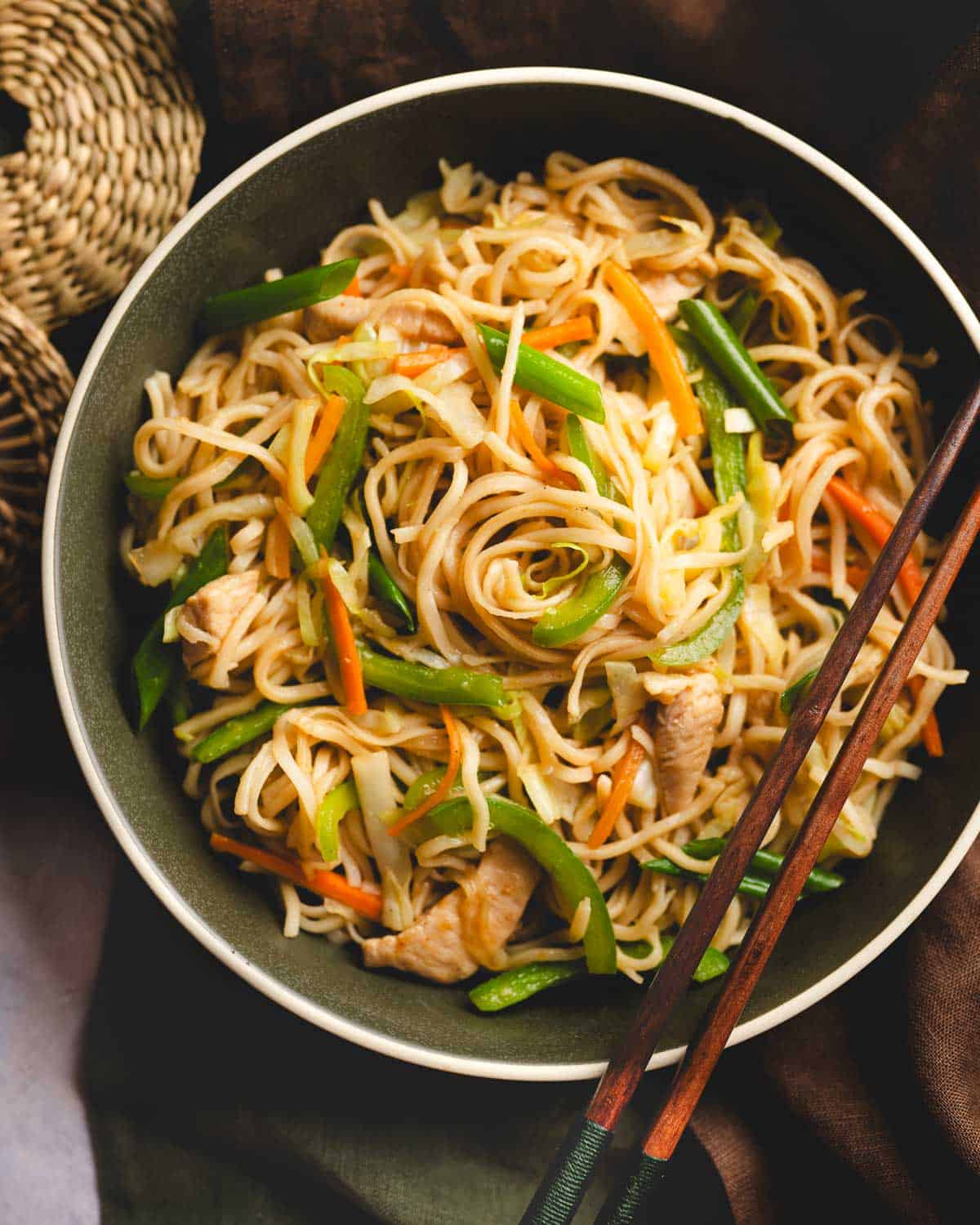
The key to getting this right is cutting everything finely and pretty much the same thickness, so you can speed through the cooking without drying out the chicken or having the veggies go soggy.
Since everything cooks so fast, this is a great one for weeknights. And if you don’t have time to prep the veggies, store-bought coleslaw mix will do the job just fine.
Here’s how I cook my chow mein. I start with the sliced chicken over high heat and cook it briefly. Then I throw in the veggies and stir-fry for a couple of minutes. When that's done, I add the sauce, let it caramelize for a few seconds, then in go the noodles and green onions. And that’s it!
If this is your first time making chow mein, take a look at the tips below. There are a few things worth knowing before you get started.
Pre-cooking notes and tips
- As I was saying earlier, how you prep the veggies really matters here. The carrot matchsticks need to be thin so they cook quickly. If they’re thick, the other veggies will start releasing liquid while you’re waiting for the carrots to cook. You want the veggies to stir-fry, not steam.
- You can swap in other veggies like snow peas, snap peas, baby corn, mushrooms, broccoli florets, or mung bean sprouts. Scale the amount of sauce and noodles in proportion to the quantity of veggies you use.
- Also, finish all your ingredient prep before you turn on the stove. Once you get going, you won’t have time to scramble around the kitchen gathering things. If you do that, the food will either overcook or burn.
- Everything in this recipe is cooked over high heat, so the oil you use matters. Use canola, vegetable, peanut, or corn oil, or any other cooking oil with a high smoke point. Extra virgin olive oil isn’t a good fit.
- I’ll admit, I don’t always use the fresh yellow egg noodles or chow mein noodles traditionally used for chow mein. A bit too lazy to drive 25 minutes to the Asian store just to get them, especially when everything else can be found at almost any major supermarket with an international food aisle. What I do always have in my pantry, though, are uncooked dried “egg” noodles, and they work great. I’ve used ramen noodles too, after tossing the seasoning and sauces, and spaghetti in a pinch. Dried noodles labeled chow mein or lo mein are also good options.
- Chinese cooking wine is commonly used in chow mein, but I leave it out. Instead, I add a little vinegar for acidity and a bit of sugar to balance out the savoriness. It works out perfectly.
- I prefer nonstick cookware because the chicken cooks very quickly, and if a stainless steel one isn’t hot enough, the chicken will stick. You don’t want to be fighting with it when it only needs a few minutes to cook. Make sure your pan or wok is wide enough that the food has room to spread out. If crowded, food will start steaming.
- You can use ground black pepper in place of white pepper if that’s what you have.
- I like a bit of heat, which is why I use sriracha here. That said, the amount called for doesn't make the chow mein spicy, and I’ll often throw in a little extra. But everyone’s spice tolerance is different, so use as much or as little as you prefer.
- Takeout chow mein is often darker compared to mine, because of dark soy sauce (and sometimes it's just food color). I don’t use it because I don’t usually have it at home. Have had my fair share of chow mein, and I know mine can go neck and neck with the best ones out there, so you really won’t miss it.
- You need toasted sesame oil here, not the regular kind. Toasted sesame oil is darker, sort of brownish in color vs the pale yellow regular sesame oil. The difference in aroma is noticeable, and it’s an important part of the dish, so I wouldn’t skip or substitute it.
- Friends have told me their kids enjoy this chow mein with a little ketchup mixed in. If you’ve got picky eaters, might be worth a try. But don't add a lot. Too much ketchup and the noodles will get sweet. The recipe's already got some sugar.
- I wouldn’t leave out the fresh ginger. Did that once because I didn’t have any on hand, and regretted it. The overall taste wasn’t as complex. Did you know it freezes really well? I peel it, cut it into chunks, and freeze it. Whenever I need some, I grate it straight from frozen. Actually easier that way because the fibers don’t get caught up in the grater.
- You can use chicken thighs instead of breast, though I prefer breast here because it cooks quickly. But but but, it is pretty unforgiving if you leave it unattended. It overcooks fast, so if that’s a worry, I’d go with thighs. Whichever you use, make sure the chicken is thinly sliced.
Serving ideas
I usually serve this chow mein on its own because it’s a complete meal. But spring rolls would be a good option if you want something alongside. The crunch would be a nice textural contrast, and these days you can get some pretty decent frozen ones. Pop them in the air fryer and they come out nice and crisp, like they’ve been deep-fried.
A nice soup would also go well, as long as it doesn’t have very strong flavors. You don’t want the soup overpowering the chow mein.
And that's a wrap!
This chow mein is simple and easy to make, but doesn’t mean it’s just a weeknight dinner. It’s just as good when you’re entertaining, and it makes a pretty nice and impressive potluck dish too. If you try my recipe, tell me how it turned out in your kitchen. I’d love to hear about it in the comments below.
Happy cooking ~ Nelo
Chow Mein Recipe
Ingredients
Vegetable Mix
- 3 cups (200 g) thinly sliced green cabbage - pack the cups tightly
- 1 small (60 g) carrot - peeled and cut into very thin matchsticks (julienned)
- 1 small (80 g) green or red bell pepper - aka capsicum, sliced into thin strips
- 3 green onions / scallions - cut into 1-inch pieces, keep whites and greens separate
Chow Mein Sauce
- 2 teaspoons corn starch - aka cornflour in some regions
- 2 tablespoons regular soy sauce
- 1.5 tablespoons oyster sauce
- 1 teaspoon sriracha - adjust to taste ⓘ
- 2 teaspoon regular white vinegar - food-grade
- 2 teaspoons sugar
- ½ teaspoon ground white pepper - or ground black pepper
- 2 teaspoons freshly grated ginger - frozen is easier to grate, I use microplane
- 1 teaspoon toasted sesame oil
Other Ingredients
- 7 ounces (200 g) uncooked dried egg noodles - See Note A for options
- 2.5 tablespoons cooking oil - should have a high smoke point
- 8 ounces (225 g) chicken breasts - boneless, skinless, thinly sliced into bite-sized pieces
- ¼ teaspoon regular white salt
- 3 cloves garlic - minced
Instructions
- Things move quickly once you start cooking, so get all your ingredients prepped and ready to go beforehand. Tip: Use the checkboxes next to each ingredient to keep track of your prep.
- Add all the ingredients listed under “vegetable mix” to a large mixing bowl, except for the green part of the scallions/green onions. Mix and set aside.
- To make the sauce, combine the cornstarch with ¼ cup water in a bowl and stir until fully dissolved. Add the remaining ingredients listed under “chow mein sauce” and mix well. Set aside.
- Cook the noodles for one minute less than the package instructions. Drain immediately and rinse under cold running water to stop the cooking. Toss the noodles with a teaspoon or two of cooking oil to keep them from sticking together. Set aside.
- Use a wide, big skillet or wok, preferably nonstick, so the food has room to spread out. Heat the oil in it over high heat. Add the sliced chicken, sprinkle with ¼ teaspoon salt, and cook until it’s no longer pink. It’ll take 1 to 3 minutes, depending on how thick the pieces are. Chicken should be "almost" cooked through.
- Then add minced garlic and cook for 5 seconds. Quickly add the "vegetable mix" and stir-fry for 2 to 4 minutes, or just until the cabbage has wilted. Don't turn down the heat, or the veggies will start releasing liquid.
- Give the chow mein sauce a quick mix. Push the veggies and chicken over to one side of the skillet/wok and pour the sauce into the space you've cleared. Let it cook for 10 seconds, then add the cooked noodles and green parts of the scallions/green onions.
- Fold everything together gently until the sauce has coated everything evenly. Serve immediately.
Comments
No Comments